TimeLine Theatre Company  
Current SeasonTicketsDirectionsDonate
HomeThe CompanyProduction HistoryWork with UsContact Us
Production History
Current Season


Review - Widowers' Houses

Theater Review
by Lawrence Bommer, Chicago Free Press Theater Editor
published 5/30/07

Shaw’s first drama, from 1892, is one of his self-proclaimed “unpleasant plays.” Modeled on Ibsen’s “problem plays,” “Mrs. Warren’s Profession” would later expose the supposedly respectable citizens who profit from prostitution. “The Philanderer” similarly served promiscuity. Inviting shock as it undermines conventional morality, “Widowers’ Houses” (Shaw’s altered allusion to a Biblical admonition not to throw widows from their homes) creates a gray quagmire where others prefer black and white. Splendidly showcased in Kevin Fox’s flawless staging, this gadfly drama is the artistic equivalent of discovering traces of cocaine on dollar bills. In a capitalist system, where profits, not the public good, prevail, we are corrupted, Shaw implies, without knowledge or consent.

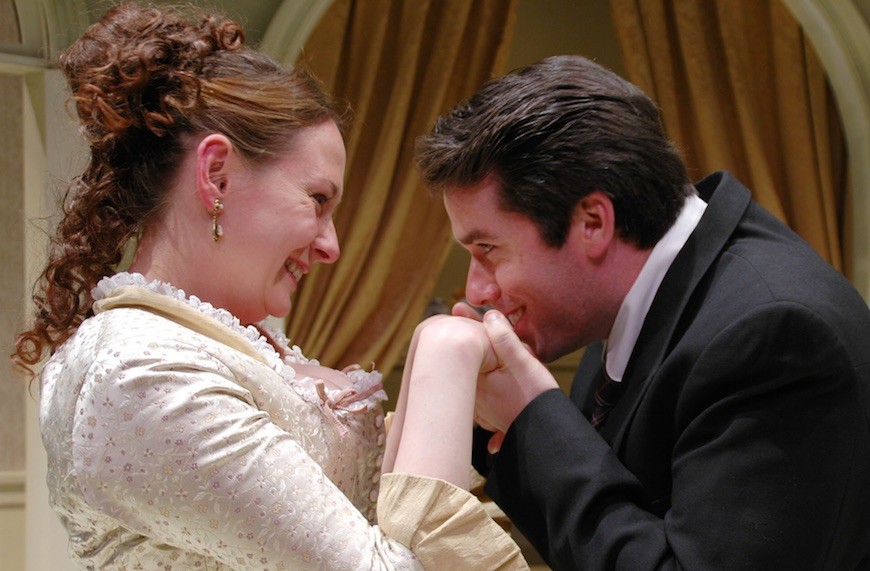
Shaw teases us from the start: Where did the mysterious Mr. Sartorius, whose demure daughter Blanche is about to marry the genial and idealistic young Dr. Trench, get his fortune? Trench’s love for this forthright young lady is sorely tested when he learns that her father is in fact London’s greatest slumlord. Worse, his noble aunt serves on the same board of vestry that, in exchange for stripping tenement victims of all they have, delivers no heat, dangerous stairways and rats. Worst, Trench learns that his sole income (this physician must work pro bono) comes from a mortgage owned by, yes, his wicked future father-in-law.

“What would you do?” Shaw asks. (No play worth watching offers easy answers.) Magisterially played by David Parkes, Sartorius is a predecessor of later robber realists in “Major Barbara” and “Mrs. Warren’s Profession.” He delivers equally ugly arguments: If I weren’t a slumlord, another would fill the gap. The poor can’t be coddled: Improvements are wasted on them as they tear down balustrades to burn the wood for heat. How many decent investors bother to check where their profits come from? (Or, to bring it closer to home, how many diamonds have blood on them?)

The ending is where the worst unpleasantness occurs.  But, given the circumstances of an impure world, it’s hard to imagine a happy one. It’s also impossible to imagine a more convincing production. As the good doctor Trench undergoes a whirlwind crash course in corruption, PJ Powers captures this naive well-wisher’s descent into disillusionment with graphic intensity. Kathy Logelin’s spirited Blanche is no swooning Victorian ingenue but a very material girl, opportunistic as her predatory papa. Mark Richard brings his usual dithering comedy to Trench’s confidant Cokane, a bona fide upper class twit. Most memorably, Terry Hamilton makes a perfect Shavian rogue as he moves from Sartorius’ rent-gouging henchman to a self-made scoundrel whose fur coat is even louder than his cackle.